-
 [email protected]
-
 +86-13706666922
[email protected]
+86-13706666922

Beer production has become increasingly focused on process control, vessel design, and flexible production layouts. Among the equipment used in brewing facilities, the Beer Fermentation Tank plays an important role during the fermentation stage. Its structure provides a controlled space where yeast converts sugars into alcohol and produces the characteristic flavors associated with different beer styles.
The shape of a fermentation vessel affects how beer moves inside the tank. Cylindroconical designs are widely used in brewing because the vertical body and conical bottom create a practical structure for fermentation and yeast collection.
A Beer Fermentation Tank can be produced in different diameters and heights according to production requirements. Taller vessels can help save floor space, while wider designs may suit facilities with different layout conditions.
The cone angle is another important design detail. A properly shaped bottom section provides space for yeast and sediment to collect, making it easier to separate these materials during production.
Material selection is closely connected to tank construction. Stainless steel is widely used for brewing vessels because it provides a smooth surface and supports the fabrication of cylindrical tanks, conical bottoms, ports, fittings, and other components.
The inner surface of a Beer Fermentation Tank is designed to provide a consistent contact area for the beer. Manufacturers typically focus on weld quality, surface smoothness, dimensional accuracy, and the connection between different tank sections.
The exterior structure can also include insulation and supporting components. These features influence the overall appearance and layout of the finished vessel.
Temperature plays an important role during beer fermentation. Different yeast strains and beer recipes can require different fermentation temperatures, so breweries need equipment capable of managing thermal conditions.
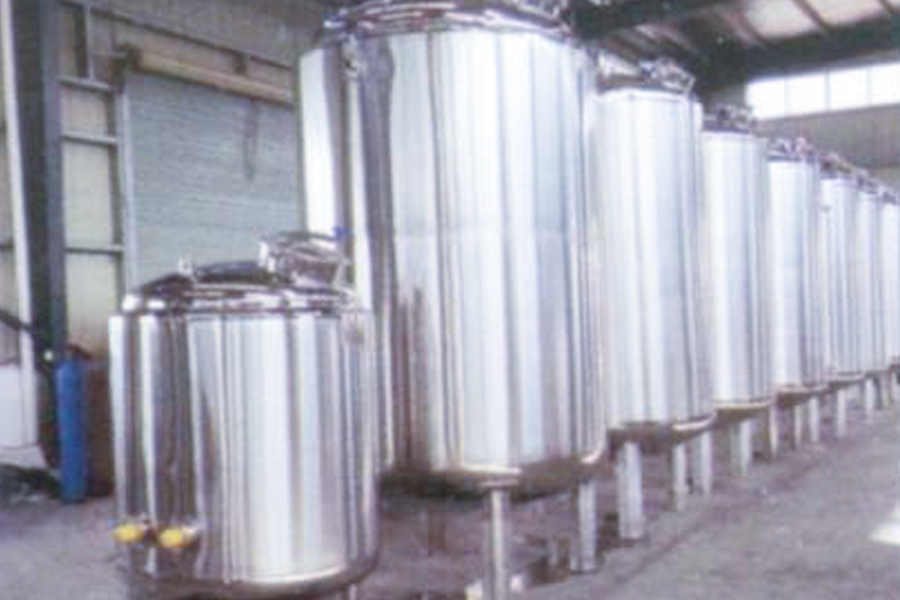
For this reason, many fermentation vessels include cooling jackets around selected areas of the tank. These jackets allow cooling media to circulate around the vessel wall and transfer heat away from the beer.
The arrangement of cooling zones can vary according to tank size and manufacturer design. A larger Beer Fermentation Tank may use multiple cooling sections to distribute temperature control across the vessel.
Modern fermentation tanks contain more than a simple cylindrical body. Ports, valves, pressure connections, temperature sensors, sampling points, and other fittings can be integrated into the design.
The location of these components matters because operators need convenient access during different production stages. A well-planned connection layout can also help equipment fit into existing brewing systems.
Digital temperature displays and control systems are also becoming common features. These systems provide information about fermentation conditions and allow operators to adjust process settings according to production requirements.
Breweries operate at different scales, so tank capacity is an important consideration. Small craft producers may need compact vessels for experimental batches or seasonal products. Larger facilities may use multiple fermentation tanks to organize several production batches at the same time.
A Beer Fermentation Tank can therefore be customized in capacity, height, diameter, inlet arrangement, outlet position, and fitting configuration.
Tank dimensions also influence how brewing equipment is arranged inside a facility. Manufacturers often consider available floor space, ceiling height, transportation requirements, and the position of connected equipment during the design stage.








 English
 عربى
عربى
