-
 [email protected]
-
 +86-13706666922
[email protected]
+86-13706666922

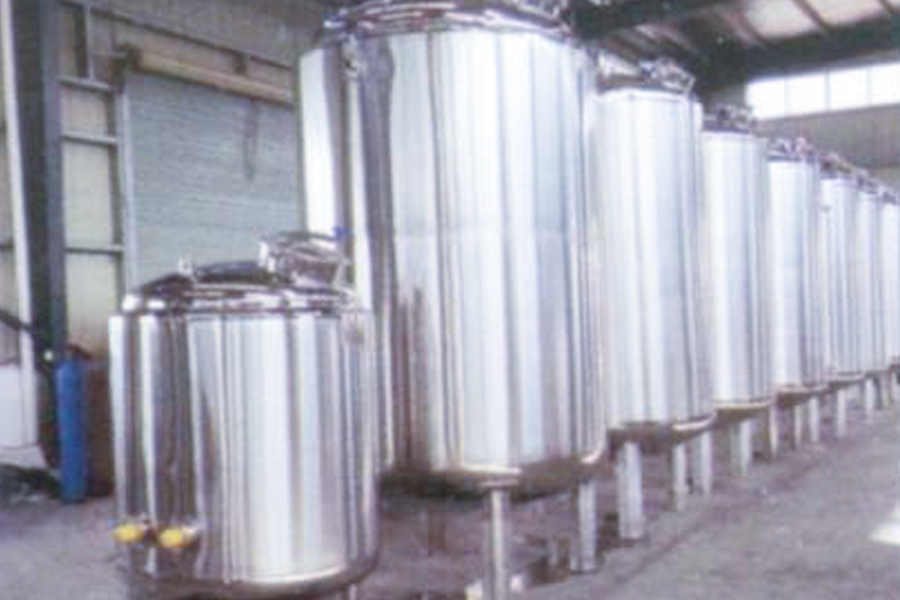
Mixing tanks typically come in stainless steel, carbon steel, or various plastic composites, and the choice affects far more than just appearance. Stainless steel remains a common request for buyers supplying food, beverage, or pharmaceutical clients, since it resists corrosion and holds up under repeated cleaning cycles between batches. Carbon steel tanks tend to appear more often in industrial or chemical processing contexts, where cost efficiency matters and the tank isn't handling substances that react poorly with the metal. Plastic composite tanks, meanwhile, show up frequently in applications involving corrosive chemicals that would otherwise degrade metal surfaces over time.
Buyers sourcing tanks for a specific application often request material compatibility charts from suppliers before committing to an order, since a mismatch between tank material and the substance being mixed can cause contamination or gradual tank degradation.
The agitator sitting inside a mixing tank does most of the actual work, and honestly, different designs produce noticeably different mixing patterns depending on what's going through the tank that day. Propeller agitators tend to work well for lower-viscosity liquids, creating a strong circulating flow that blends thin substances quickly and without much fuss. Paddle agitators move more slowly and handle thicker substances better, since their broader blades push through viscous material without straining the motor even during longer runs. Turbine agitators sit somewhere in between the two, often chosen for applications requiring a more uniform blend across a wider range of viscosities than either option manages alone.
Sourcing teams building out equipment lines for varied client bases frequently stock tanks with interchangeable agitator options, a practical workaround that saves them from carrying separate tank shells for every possible use case. Since a single tank shell can serve multiple applications depending on which agitator gets installed, this approach tends to cut down on both warehouse space and upfront tooling costs, which matters more than it might seem once order volume picks up.
Mixing tanks range from small benchtop units used in laboratory or pilot-scale settings up to large industrial tanks capable of handling thousands of gallons per batch. Buyers sourcing for growing operations often ask suppliers whether a given tank line can scale incrementally, since jumping from a small pilot tank straight to a full industrial size sometimes skips over capacity ranges that would otherwise fit a mid-stage production need.
This question comes up often enough that distributors serving manufacturing clients tend to keep several capacity tiers in their catalog rather than offering just a small and large option, since buyers scaling production gradually need intermediate steps to avoid overinvesting in capacity they don't yet need.
Procurement teams evaluating mixing tank suppliers tend to ask a consistent set of questions regardless of industry. Can the tank's interior finish be adjusted for applications requiring a smoother or rougher surface? Is the agitator motor rated for continuous operation, or is it designed for intermittent use? Can baffles be added inside the tank to reduce swirling for certain mixing patterns?
These questions matter because tank performance depends on more than the shell itself — internal features like baffles, finish, and agitator placement all shape how effectively a batch actually blends, and getting these details wrong can mean reprocessing a batch that didn't mix evenly the first time.








 English
 عربى
عربى
