-
 [email protected]
-
 +86-13706666922
[email protected]
+86-13706666922

Industrial production facilities often need reliable equipment for combining liquids and creating stable mixtures. A dispersed emulsification tank provides a controlled environment where materials can be mixed, dispersed, and emulsified in a single vessel. This approach supports consistent batch results across food processing, chemical, and related manufacturing operations.
Many production lines handle ingredients that require thorough blending to achieve uniform texture or distribution. A dispersed emulsification tank uses mechanical action and vessel design to break down particles and distribute them evenly through the liquid phase. Operators load the materials, start the process, and monitor progress from a central control point.
The tank’s structure allows different stages of mixing to occur without transferring the batch to separate equipment. This arrangement reduces handling steps and keeps the material within one controlled space throughout the cycle. Teams working with sauces, coatings, or chemical formulations find the setup practical for daily schedules.
Shift teams rely on equipment that fits into existing production rhythms. A dispersed emulsification tank can be positioned near ingredient staging areas or connected to upstream and downstream systems. Once the batch is complete, the mixture moves to filling, further processing, or storage with limited interruption.
Because the tank handles both dispersion and emulsification functions, operators avoid switching between multiple vessels for related tasks. This consolidation supports steady throughput when production volumes remain consistent across the day. The unit becomes part of the regular sequence rather than a specialized station used only occasionally.
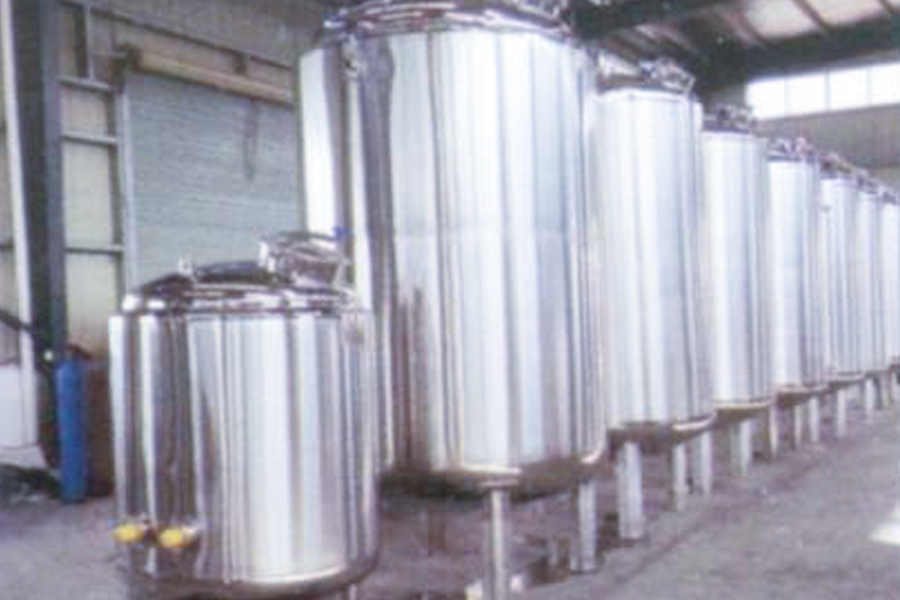
Vessel capacity options allow facilities to match the tank to typical batch sizes. Agitator and homogenizer components work together inside the dispersed emulsification tank to create the required shear and circulation. Temperature control jackets or coils can be included to manage heat during the process when formulations require specific conditions.
Inlet and outlet connections follow standard industrial patterns, making it straightforward to link the tank with pumps, valves, and transfer lines already present on the floor. Observation ports or sensors provide visibility into the mixture without opening the vessel during operation. These elements support controlled and repeatable processing.
Plant layouts differ in available floor space, ceiling height, and utility access. A dispersed emulsification tank designed for industrial use considers these factors through compact footprints or vertical configurations. Teams review the materials they process most frequently and select agitation styles that align with those viscosities and particle characteristics.
Integration with existing control systems further supports smooth operation. Operators can set mixing times, speeds, and temperature targets according to established recipes. Consistent parameter settings help maintain uniform results across consecutive batches produced on different shifts.
Morning preparation often includes verifying that the dispersed emulsification tank is ready for the first scheduled batch. Ingredients are staged nearby, and the vessel is prepared for loading. Once the cycle begins, staff can focus on other upstream or downstream tasks while the tank completes its work.
At the end of a batch the mixture transfers out, and the tank is readied for the next formulation. This cycle repeats throughout the production day with predictable timing. The equipment supports both single-product runs and sequences of different formulations when cleaning protocols between batches are followed according to plant procedures.
Capacity, agitation type, and connection standards influence daily performance. Facilities review their typical batch volumes and material properties before choosing a dispersed emulsification tank. Matching the vessel size to common production quantities helps avoid underutilized capacity or frequent changeovers.
Control interface clarity and accessibility also matter. When operators can adjust parameters and monitor progress without complex procedures, the tank fits more naturally into shift routines. Standardized connections support faster linking to surrounding equipment when line configurations change.







 English
 عربى
عربى
