-
 [email protected]
-
 +86-13706666922
[email protected]
+86-13706666922

Across the global landscape of industry and infrastructure, a ubiquitous yet often overlooked component plays a critical role in supply chains and production: storage tanks. These large-scale vessels are engineered to hold, protect, and manage vast quantities of liquids and gases, forming the backbone of sectors ranging from energy and chemicals to water treatment and food production. The design, construction, and maintenance of storage tanks represent a specialized field of engineering focused on safety, integrity, and operational reliability over extended periods.
The primary function of storage tanks is to provide secure containment. Whether storing crude oil at a refinery, potable water for a municipality, chilled milk at a dairy, or liquefied gases at an industrial plant, storage tanks must preserve the quality and quantity of their contents. They act as vital buffers within supply chains, balancing the continuous flow of production with the variable rhythms of distribution and consumption. This buffering capacity is essential for maintaining operational continuity, allowing processes to run smoothly even when upstream supply or downstream demand fluctuates.
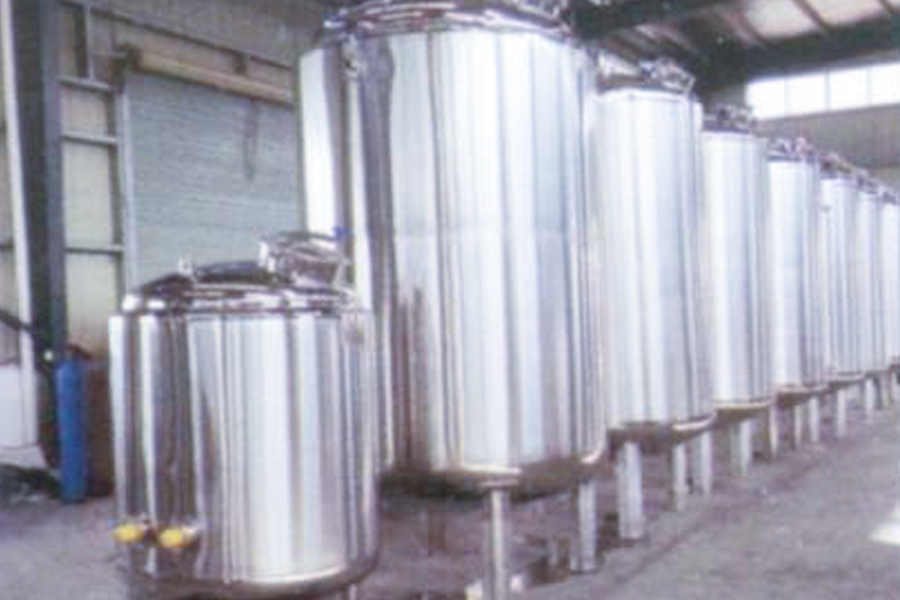
The engineering of storage tanks is highly specialized and varies dramatically based on the substance being stored. For water and many non-hazardous liquids, welded carbon steel storage tanks are common. In the petroleum and chemical industries, where volatile or corrosive products are held, materials and designs become more complex. These storage tanks may be constructed from specialty alloy steels or feature protective internal linings to prevent corrosion. Furthermore, to manage volatile organic compound emissions, many modern storage tanks for hydrocarbons are equipped with floating roofs or internal floating covers that less the vapor space above the liquid, thereby reducing evaporation and environmental release.
Safety is the paramount consideration in the design and operation of storage tanks. Given the potential volume and nature of their contents, failure can have significant consequences. Consequently, storage tanks are subject to rigorous international standards and codes governing their construction, including welding procedures, material specifications, and non-destructive testing. They are typically equipped with multiple safety systems: secondary containment berms or dikes to catch spills, advanced leak detection systems, pressure and vacuum relief valves, and comprehensive fire protection equipment. Regular inspection regimes, involving visual checks, ultrasonic thickness testing, and robotic internal examinations, are mandated to assess corrosion, weld integrity, and foundation stability, ensuring the long-term safety of the assets.
The integration of digital technology is transforming the management of storage tanks. Modern facilities employ sophisticated inventory management systems that use sensors to provide real-time data on tank levels, temperature, and pressure. This information is crucial for logistics planning, loss prevention, and process control. The advent of the Industrial Internet of Things (IIoT) allows for the remote monitoring of storage tanks, enabling predictive maintenance models. By analyzing trends in sensor data, operators can identify potential issues like sediment buildup or early-stage corrosion before they develop into major problems, enhancing both safety and operational efficiency.
The future of storage tanks will be influenced by the global energy transition and sustainability goals. The growing focus on biofuels, green hydrogen, and carbon capture, utilization, and storage (CCUS) is driving demand for new types of storage tanks designed for these novel media. Research is also focused on developing smarter, more resilient materials and coatings to extend service life in harsh environments. As industries evolve, the humble storage tank will continue to adapt, remaining an indispensable and intelligently managed node in the complex network of modern material handling, embodying the critical balance between massive scale and meticulous control.








 English
 عربى
عربى
