-
 [email protected]
-
 +86-13706666922
[email protected]
+86-13706666922

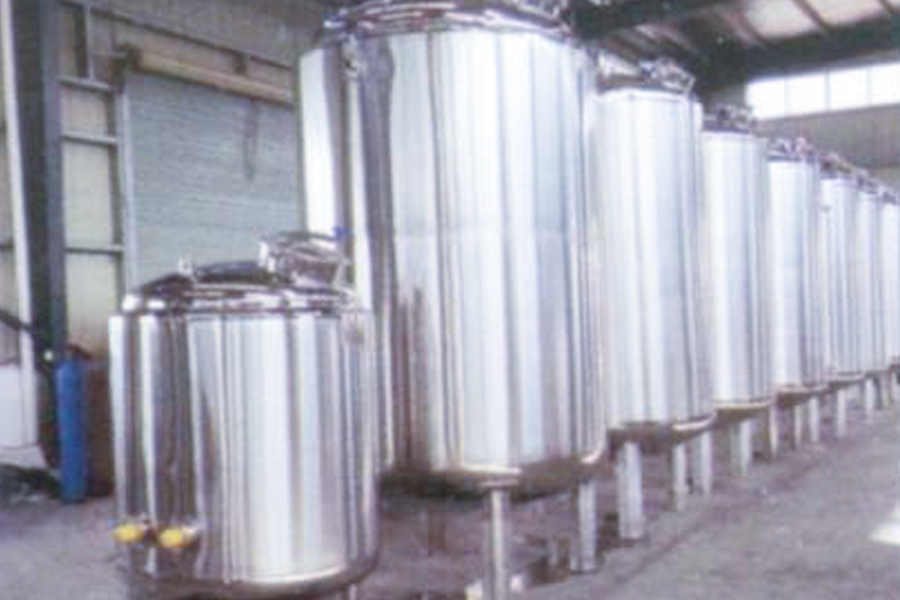
Mixing tanks are widely used in manufacturing and processing industries to combine liquids, powders, or granular materials into uniform mixtures. A mixing tank is a container equipped with an agitator that rotates inside the vessel, creating flow patterns that blend the contents. The basic design of mixing tanks includes a cylindrical body, a top cover or open top, a bottom outlet, and one or more impellers mounted on a central shaft. The capacity of mixing tanks ranges from small laboratory units of 5 liters to industrial vessels holding 50,000 liters or more. mixing tanks are made of stainless steel, which resists corrosion and is easy to clean between batches. Carbon steel mixing tanks are used for non-corrosive materials, while plastic or fiberglass mixing tanks suit applications where metal contamination is a concern. The mixing tanks serve functions such as dissolving solids into liquids, suspending particles, dispersing gases, or promoting chemical reactions between components.
The construction of mixing tanks follows standards that ensure structural integrity and process compatibility. The wall thickness of mixing tanks depends on the internal pressure and the density of the materials being mixed. A mixing tank operating at atmospheric pressure typically has walls of 3 to 6 millimeters for small to medium vessels, while pressure-rated mixing tanks require thicker walls or external reinforcement. The bottom shape of mixing tanks is either flat, dished, or conical, with dished bottoms being common for liquid blending because they promote complete drainage. The agitator shaft in mixing tanks passes through a seal at the top or bottom of the vessel, preventing leakage while allowing rotation. Mechanical seals or packing glands are used on mixing tanks that handle hazardous or volatile materials. Baffles, which are stationary vertical strips attached to the inner wall of mixing tanks, disrupt swirling patterns and improve mixing efficiency.
The impeller selection for mixing tanks depends on the viscosity and behavior of the materials. A hydrofoil impeller in mixing tanks generates axial flow, pushing the contents from top to bottom or bottom to top. This type of impeller is effective for miscible liquid blending and solids suspension at lower viscosities. A pitched blade turbine in mixing tanks produces both axial and radial flow, suitable for medium-viscosity mixtures and heat transfer applications. For high-viscosity materials such as pastes or doughs, mixing tanks use anchor or helical ribbon impellers that scrape the vessel walls and move material in a controlled pattern. The rotational speed of impellers in mixing tanks ranges from 10 to 1,500 revolutions per minute, with lower speeds used for large vessels or shear-sensitive products.
Instrumentation on mixing tanks monitors and controls the blending process. A typical mixing tank setup includes a temperature sensor, a pressure gauge, and a level indicator. For automated operation, mixing tanks may have sensors for pH, conductivity, or turbidity that provide real-time feedback on mixture uniformity. The motor driving the agitator on mixing tanks is sized according to the torque required at the intended operating speed. A variable frequency drive allows the operator to adjust the impeller speed on mixing tanks during a batch, starting slowly to incorporate powders without dusting and increasing speed later for final blending. The mixing tanks are then rinsed and inspected before the next batch. Mixing tanks continue to be a central piece of equipment in industries ranging from food and beverage to chemicals and cosmetics, providing reliable blending of ingredients in controlled conditions.








 English
 عربى
عربى
