-
 [email protected]
-
 +86-13706666922
[email protected]
+86-13706666922

Manufacturers across pharmaceutical, chemical, and food processing sectors continue to refine their liquid handling systems. One piece of equipment that consistently draws attention is the Liquid Preparation Tank. This vessel supports the controlled blending of solutions, suspensions, and emulsions under defined process conditions.
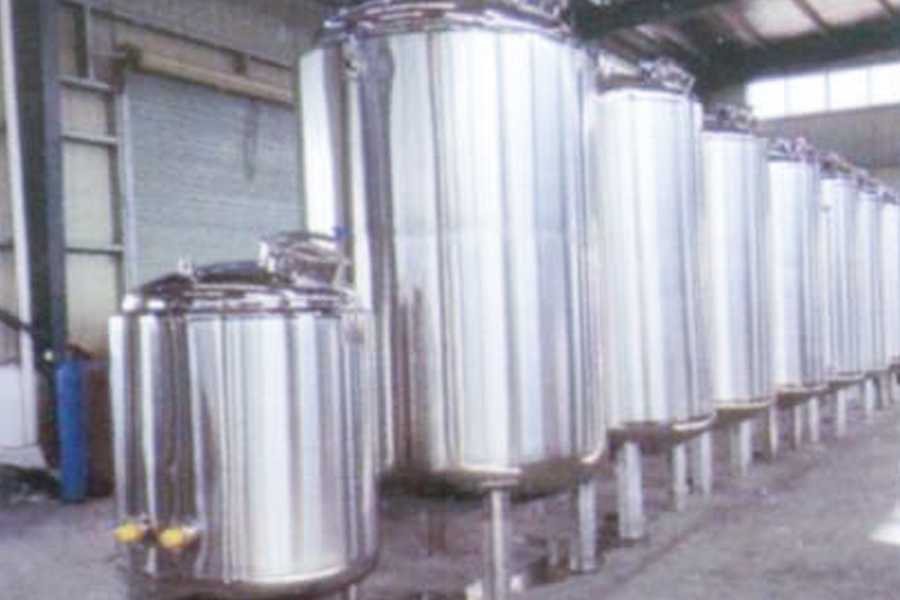
A Liquid Preparation Tank serves as a dedicated vessel for dissolving solids, dispersing powders, and combining multiple liquid streams. Operators load raw materials through top-mounted ports or automated feed systems. Agitators then create the required flow patterns to achieve uniform distribution. Temperature control jackets or coils keep the contents within the specified range while sensors monitor viscosity and density.
The design typically includes a cylindrical body with a dished or conical bottom. This geometry reduces dead zones and supports complete drainage. Internal surfaces remain smooth to limit product retention. Many units feature CIP-compatible fittings that simplify cleaning between batches without full disassembly.
Effective mixing depends on the selection of impeller type and shaft speed. Propeller, turbine, or anchor agitators generate different shear rates suited to low- or high-viscosity media. Variable-frequency drives allow operators to adjust speed as the batch progresses. When powders are introduced, a high-shear disperser may operate alongside the main agitator to break agglomerates quickly.
Instrumentation plays a central role. Level sensors, temperature probes, and pressure transmitters feed data to a local or plant-wide control system. Operators can set recipe parameters so that heating, cooling, and agitation follow predetermined profiles. This approach reduces batch-to-batch variation and shortens process times.
In pharmaceutical manufacturing, a Liquid Preparation Tank prepares oral solutions, topical formulations, and intermediate intermediates for further processing. Accurate volume measurement and controlled dissolution rates help maintain consistent concentration.
Chemical plants use the same equipment for producing adhesives, coatings, and specialty formulations. The ability to handle both aqueous and solvent-based systems expands its utility. Food processors rely on it for preparing syrups, sauces, and dairy-based mixtures where gentle yet thorough blending preserves product quality.
Vessel bodies are commonly fabricated from stainless steel grades chosen for corrosion resistance and cleanability. Surface finishes meet industry smoothness standards so that residues do not accumulate. Gaskets and seals are selected according to the chemical compatibility of the process fluids.
Nozzles and manways are positioned to support efficient material addition and inspection. Sight glasses or illuminated ports give operators a direct view of the contents during critical stages. Some designs incorporate weighing systems so that ingredient quantities can be verified without transferring material to a separate scale.
Capacity ranges from compact laboratory-scale units to large production vessels holding several thousand liters. Laboratory models support process development and scale-up studies. Production units emphasize robustness, ease of access, and compatibility with existing utility supplies such as steam, chilled water, and compressed air.
Some configurations of the Liquid Preparation Tank include additional features such as vacuum capability for deaeration or inert-gas blanketing for oxygen-sensitive materials. Others incorporate secondary agitation devices that activate only during specific process phases. These options allow the same basic Liquid Preparation Tank architecture to serve varied formulation needs.







 English
 عربى
