-
 [email protected]
-
 +86-13706666922
[email protected]
+86-13706666922

Storage tanks are a fundamental part of how industries manage their day-to-day operations. From oil refineries and chemical plants to food processing facilities and municipal water systems, these structures quietly support the movement and containment of materials that keep businesses running. Without adequate storage capacity, even well-designed industrial processes would struggle to maintain consistent output.
At a basic level, a storage tank is an engineered container built to hold liquids, gases, or bulk materials for a defined period under specific conditions. What makes tank selection complicated is that no two applications are exactly alike. The substance being stored, the required volume, operating temperatures, pressure conditions, and site constraints all influence what kind of tank makes sense for a given situation.
Above-ground storage tanks are probably the most familiar type. Walk past any refinery or chemical facility and you will see rows of cylindrical steel structures in varying sizes. They are relatively straightforward to inspect and service, which is part of why they remain a go-to choice for high-volume operations. Underground tanks serve a different purpose — buried beneath the surface, they are commonly used for fuel storage at gas stations or for heating oil at residential and commercial properties.
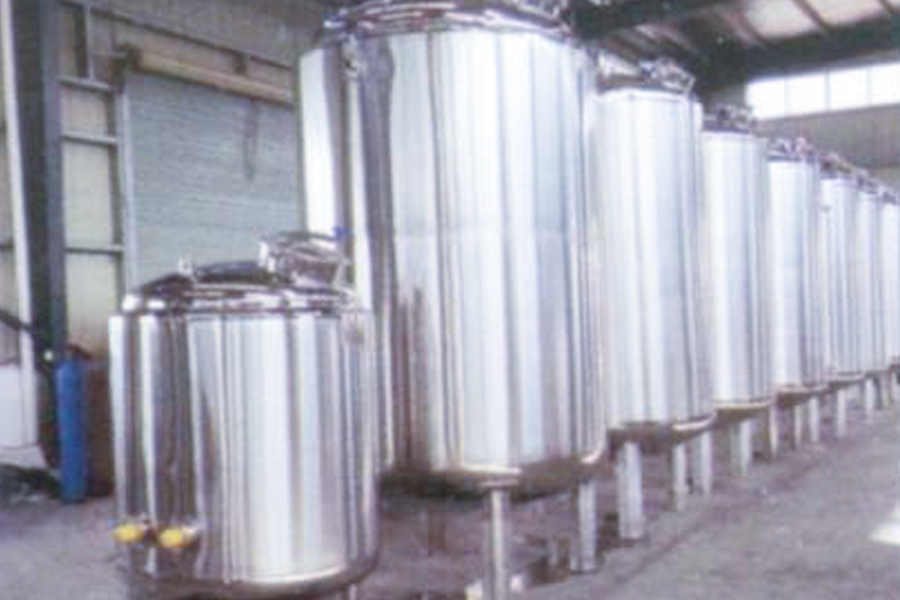
Material selection is one of the more technical decisions in tank procurement. Carbon steel has long been used for petroleum and general chemical storage because it holds up well under pressure and keeps costs manageable. Stainless steel becomes the preferred option when the stored substance is sensitive to contamination — pharmaceutical liquids, food-grade products, and aggressive chemicals all typically call for it. Fiberglass reinforced plastic has carved out its own niche, particularly where chemical resistance matters and where weight is a concern.
Tank geometry and roof design also vary depending on what is being stored. Fixed-roof tanks work well for substances with low vapor pressure, while floating-roof tanks are engineered so the roof moves up and down with the liquid level inside, cutting down on vapor loss. This design is especially common in petroleum storage. For gases stored under high pressure or at very low temperatures — liquefied natural gas being a well-known example — pressure vessels and cryogenic tanks are built to handle those more demanding conditions.
Fittings and accessories round out a complete storage system. Vents, gauges, manways, level indicators, heating coils, and inlet and outlet connections are all part of making a tank functional in real operating conditions. In recent years, sensor integration has become more common, giving operators the ability to monitor fill levels, flag potential leaks, and manage temperatures without being physically present at the tank.
Demand for storage tanks has been holding steady across multiple sectors. The oil and gas industry continues to drive significant procurement activity, particularly in regions where refining and exploration are active. Water and wastewater treatment has also been a consistent growth area, as utilities work to expand capacity in response to population increases. In agriculture, tanks are used across a range of applications — storing fertilizers, liquid feed additives, irrigation water, and byproducts from grain processing.
Storage tanks rarely attract much attention, but they sit at the center of a wide range of industrial processes. As production scales up and supply chains become more interconnected, the role of reliable bulk storage only becomes more important across industries and geographies.









 English
 عربى
عربى
