-
 [email protected]
-
 +86-13706666922
[email protected]
+86-13706666922

Emulsification Tanks serve industrial process lines that blend oil and water phases into uniform mixtures. Overseas buyers sourcing these vessels for food, cosmetic, or chemical plants focus on vessel geometry, agitation design, and temperature control options. Clear details about construction and operating characteristics help purchasing teams match the equipment to their batch sizes and product viscosities.
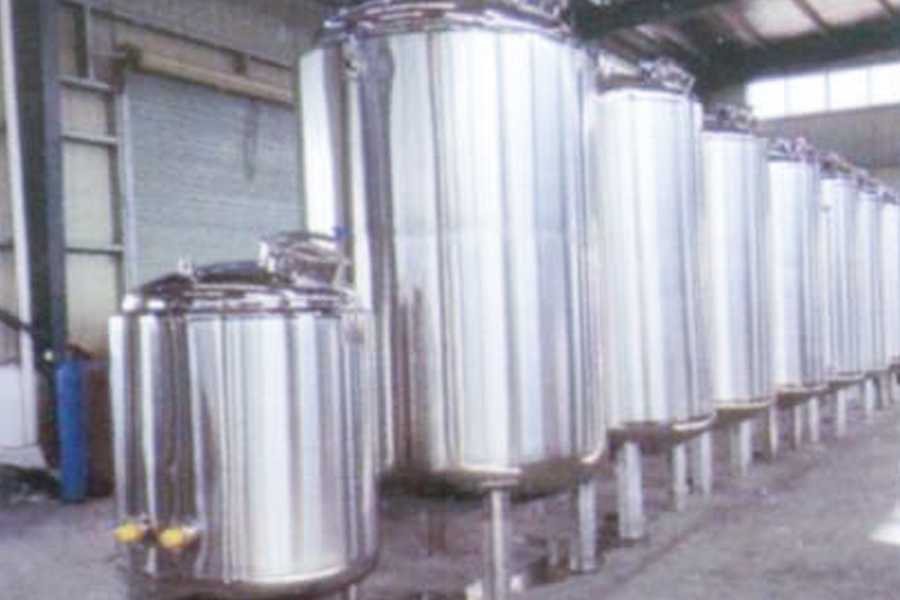
An Emulsification Tank typically consists of a cylindrical stainless-steel vessel with a dished or conical bottom. The vessel wall may include a heating or cooling jacket that circulates steam, hot water, or chilled fluid. An agitation system mounted on the top or side drives one or more impellers that shear and disperse the phases. Inlet and outlet ports allow raw materials to enter and finished product to leave.
Vessel volume ranges from small laboratory-scale units to larger production tanks. Wall thickness and reinforcement depend on operating pressure and temperature. Internal surfaces are polished to reduce product adhesion and support thorough discharge. Sight glasses, temperature probes, and level sensors can be fitted according to process needs. These features form the basic platform that manufacturers adapt for different industries.
The mixing system determines how effectively the tank disperses one liquid into another. High-shear homogenizer heads create fine droplets by forcing the mixture through narrow gaps at high speed. Anchor or scraper blades sweep the vessel wall to keep product moving and prevent localized overheating. Some designs combine a central high-shear unit with slower wall scrapers so both intense dispersion and bulk circulation occur in the same batch.
Drive motors are sized according to the expected viscosity and fill level. Variable-speed controls allow operators to adjust shear intensity during different stages of the process. Shaft seals keep the product contained while the shaft rotates. Buyers evaluating Emulsification Tanks often request information on impeller diameter, tip speed, and power rating so they can compare performance against their formulation requirements.
Many emulsions require controlled heating to melt solid fats or cooling to set the final texture. A jacket surrounding the vessel wall provides this capability. The jacket may be divided into zones so different sections of the tank can be heated or cooled independently. Internal coils offer an alternative when higher heat-transfer rates are needed. Insulation on the outer jacket surface reduces energy loss and keeps the external surface cooler for operator safety.
Temperature probes placed in the product and in the jacket fluid give operators real-time data. Accurate control of these temperatures supports consistent droplet size and product stability from batch to batch. When specifying Emulsification Tanks, purchasing teams usually state the required temperature range and preferred heating medium so the supplier can select suitable jacket construction and valve arrangements.
During a typical batch, operators load the continuous phase, start agitation, and gradually add the dispersed phase while controlling temperature. The high-shear stage reduces droplet size, after which slower mixing may continue to stabilize the emulsion. Once the batch reaches the target consistency, the product is discharged and the vessel is prepared for the next cycle.
Standardizing on a limited range of tank sizes and agitation styles simplifies operator training and spare-part management across multiple production lines. Attention to vessel geometry, impeller configuration, and jacket performance enables buyers to select Emulsification Tanks that deliver repeatable mixing results for their specific formulations without unnecessary complexity.







 English
 عربى
