-
 [email protected]
-
 +86-13706666922
[email protected]
+86-13706666922

At the heart of any fermentation tank is the need to manage a set of variables that microorganisms are sensitive to: temperature, pressure, oxygen levels, and agitation. Yeast, bacteria, and other cultures behave differently depending on their environment, so a tank has to maintain conditions within a fairly narrow range for the process to go as planned. This usually means built-in temperature control systems, sometimes using a jacketed wall design that circulates cooling or heating fluid around the tank's exterior. Some tanks also include ports for monitoring equipment, allowing operators to track conditions without opening the vessel and disrupting the process.
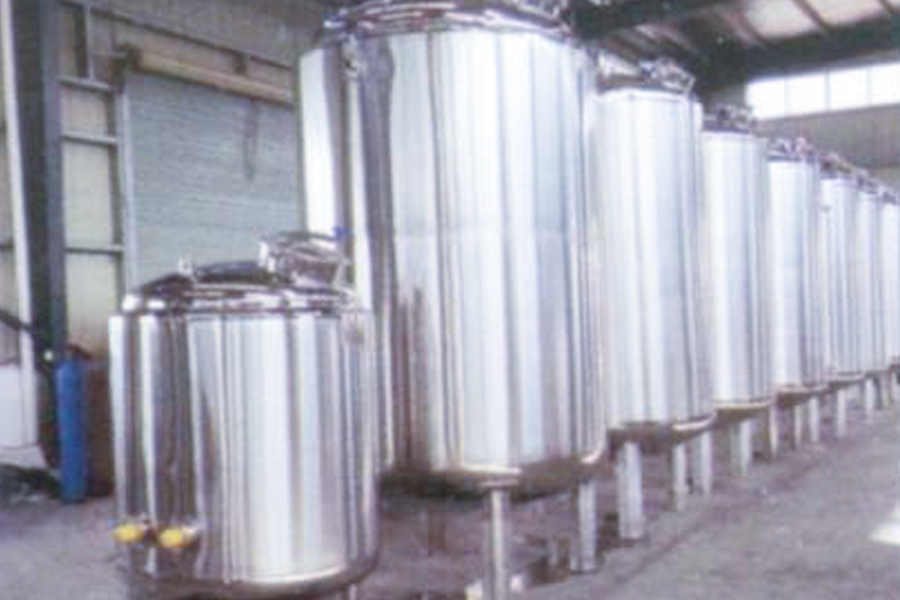
Stainless steel is the material of choice for the vast majority of fermentation tanks, and there are practical reasons behind that. It resists corrosion from acidic or reactive substances, it's easy to clean thoroughly between batches, and it doesn't react with the contents in ways that could alter flavor, purity, or chemical composition. Different grades of stainless steel offer varying levels of resistance depending on what's being fermented, which is why buyers sourcing tanks for specific applications often specify the exact grade needed. Some smaller-scale or specialty setups use other materials, but stainless steel remains the standard across food, beverage, and pharmaceutical fermentation.
The shape of a fermentation tank isn't arbitrary. Cylindrical tanks with conical bottoms, often called cylindroconical tanks, are common in brewing because the cone shape allows sediment and spent yeast to collect at the bottom, making it easier to remove without disturbing the rest of the batch. Flat-bottomed tanks are used in other contexts where sediment removal works differently. The angle of the cone, the height-to-diameter ratio, and even the placement of inlet and outlet valves all affect how evenly fermentation proceeds throughout the tank. Buyers matching a tank to their process usually think through these details rather than treating every tank as interchangeable.
Procurement needs vary widely depending on who's buying. Craft breweries and small-batch producers often look for tanks that balance capacity with manageable footprint, since space is frequently limited. Industrial buyers in pharmaceuticals or biochemical production tend to prioritize precise control systems and material certifications suited to their specific processes. OEM and ODM partners frequently request custom configurations, adjusting tank dimensions, valve placement, or jacket design to fit into an existing production line. Bulk buyers and distributors, meanwhile, often look for suppliers capable of maintaining consistent specifications across multiple units, which matters when tanks need to work together as part of a larger system.
Why are fermentation tanks usually made from stainless steel?
Stainless steel resists corrosion, cleans easily between batches, and doesn't react with the contents, which helps maintain product purity and consistency.
What's the purpose of the cone shape in cylindroconical fermentation tanks?
The cone shape allows sediment and spent yeast to settle and collect at the bottom, making it easier to remove without disturbing the rest of the batch.
Can fermentation tanks be customized for specific production needs?
Yes, many suppliers adjust tank dimensions, valve placement, and jacket design to match a buyer's existing production line or specific process requirements.








 English
 عربى
عربى
