-
 [email protected]
-
 +86-13706666922
[email protected]
+86-13706666922

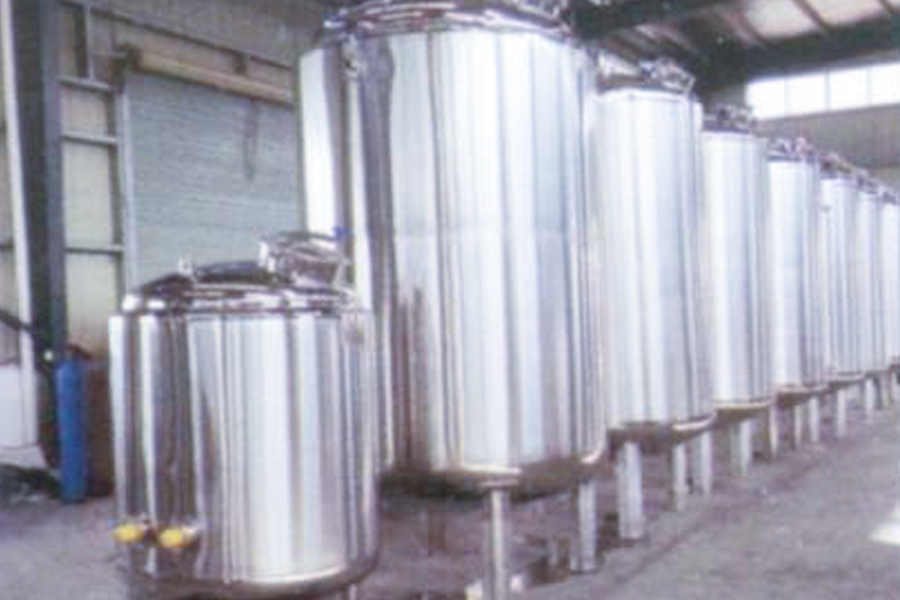
The specialized vessels designed to combine immiscible liquids into stable, uniform mixtures are experiencing significant technological advancement. Emulsification tanks, important equipment across food processing, cosmetic manufacturing, pharmaceutical production, and chemical industries, have evolved to meet increasingly demanding requirements for product consistency, stability, and quality. As consumer expectations rise and regulatory standards tighten, the precision and reliability of modern emulsification tanks have become critical factors in manufacturing success.
At the core of any emulsification operation is the tank itself, and recent innovations in vessel design have focused on optimizing the conditions necessary for creating and maintaining stable emulsions. Unlike simple mixing tanks, emulsification tanks must generate intense shear forces capable of breaking dispersed phase droplets into sizes small enough that they remain suspended rather than separating. The geometry of these tanks, including internal baffles and bottom contours, directs flow patterns that enhance droplet breakup while preventing dead zones where unmixed material might accumulate.
The agitation systems used in emulsification tanks have become increasingly sophisticated. Traditional propellers and turbines have been supplemented or replaced by specialized rotor-stator devices that generate the high shear necessary for fine emulsions. These systems work by drawing materials through a narrow gap between a rapidly rotating rotor and a stationary stator, subjecting them to intense mechanical and hydraulic forces that reduce droplet size dramatically. Multiple passes through this high-shear zone can achieve droplet sizes in the micron or even submicron range, producing emulsions with exceptional stability.
Temperature control plays a crucial role in emulsification tank performance. The viscosity of both continuous and dispersed phases affects droplet breakup, and viscosity varies with temperature. Many emulsification processes require precise temperature maintenance to achieve target droplet sizes and prevent premature setting or separation. Jacketed emulsification tanks allow heating or cooling fluids to circulate around the vessel, maintaining ideal conditions throughout the batch. Temperature sensors and control systems ensure that these conditions remain consistent, eliminating variation between production runs.
Homogenization capabilities have been integrated into many modern emulsification tanks. While high-shear mixing can produce fine emulsions, true homogenization subjects the entire batch to uniform high-pressure processing that further reduces and standardizes droplet size. Some emulsification tanks now incorporate in-line homogenizers that recirculate batch contents through a homogenizing valve, combining the efficiency of tank mixing with the intensity of homogenization. This integrated approach streamlines production while delivering predominant product quality.
Vacuum processing has become common in emulsification tank applications where air incorporation would be problematic. Many emulsions, particularly in food and cosmetic applications, must be free of entrapped air that could affect appearance, texture, or stability. Operating emulsification tanks under vacuum removes air from ingredients before emulsification and prevents air entrainment during high-shear mixing. The result is a denser, more uniform product with improved visual and textural qualities.
As demand for emulsion-based products continues to grow across multiple industries, the importance of reliable, precise emulsification tanks will only increase. From salad dressings and sauces to lotions and creams, from pharmaceutical ointments to industrial lubricants, stable emulsions touch countless aspects of daily life. The advances in emulsification tank technology seen in recent years position manufacturers to meet this demand with products of consistent quality and exceptional stability.






 English
 عربى
عربى
