-
 [email protected]
-
 +86-13706666922
[email protected]
+86-13706666922

Mixing oil and water sounds simple until you try doing it at production scale, hundreds of liters at a time, with a result that needs to stay stable on a shelf for months. That's the job emulsification tanks handle every day in cosmetics labs, food plants, and pharmaceutical facilities. They take ingredients that naturally separate and force them into a uniform blend that holds together.
An emulsion is essentially a mixture of two liquids that don't naturally combine — oil droplets suspended in water, or the reverse. Left alone, they'll separate again within minutes. Emulsification tanks solve that by applying mechanical energy, usually through high-shear mixing, to break the droplets down small enough that they stay dispersed rather than drifting back apart.
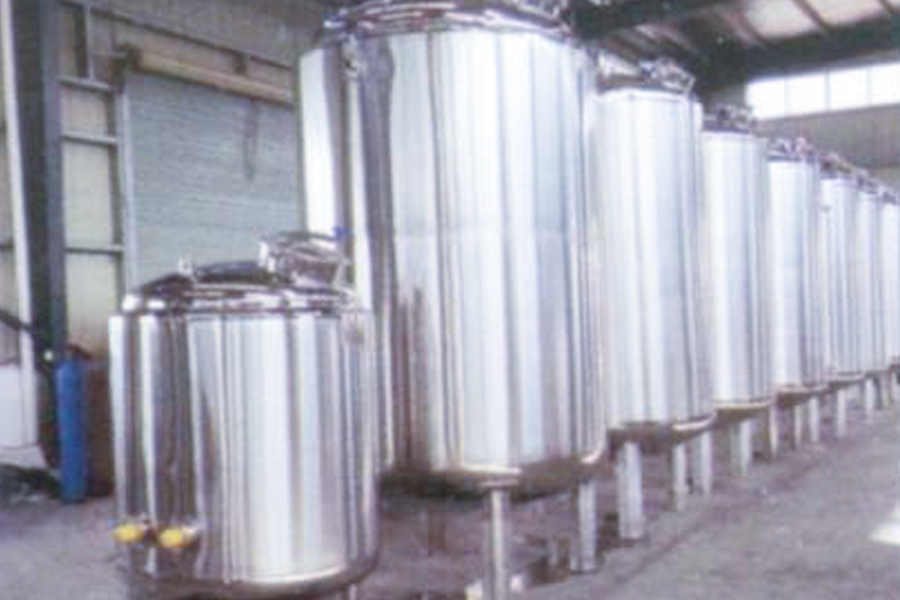
The tank itself typically includes a jacketed vessel for heating or cooling, an agitator for general mixing, and a separate high-shear homogenizer head that handles the fine dispersion work. Some designs also include vacuum capability, which helps remove trapped air bubbles that would otherwise show up as inconsistencies in the finished product.
Cosmetics manufacturing is probably the most visible user of emulsification tanks — creams, lotions, and sunscreens all rely on stable oil-water blends to achieve the right texture and feel. Food production uses similar equipment for sauces, dressings, and dairy-based products where consistency matters just as much as flavor. Pharmaceutical facilities use them for ointments and topical formulations that need precise, repeatable blending batch after batch.
Each of these applications puts slightly different demands on the tank. Cosmetics batches often run smaller and require finer control over texture. Food production tends to move higher volumes with a focus on consistent viscosity across every batch. Pharmaceutical work usually prioritizes precise temperature control and contamination prevention throughout the mixing cycle.
The jacket design matters quite a bit here. Many formulations need to be heated to melt waxes or fats before mixing, then cooled gradually while the emulsion sets. A tank with poor temperature control can end up with an unstable batch, even if the mixing itself was done correctly.
Emulsification tanks come in a wide range of sizes, from small lab-scale units used for formulation testing to large production vessels handling several thousand liters per batch. Buyers sourcing for OEM or contract manufacturing often need tanks that can scale between pilot batches and full production runs without changing the underlying process too much.
Material selection also plays a role. Stainless steel remains a common choice across cosmetics, food, and pharmaceutical applications because it resists corrosion and cleans easily between batches. Surface finish specifications can vary depending on how sensitive the formulation is to contamination or residue buildup.
Emulsification tanks don't get much attention outside the industries that rely on them, but the equipment does a lot of quiet work behind the scenes. Getting a stable, uniform emulsion at scale depends on matching agitator type, shear force, and temperature control to the specific formulation being produced. For buyers evaluating suppliers, understanding batch size needs and viscosity range upfront tends to make the sourcing process go a lot smoother.







 English
 عربى
عربى
