-
 [email protected]
-
 +86-13706666922
[email protected]
+86-13706666922

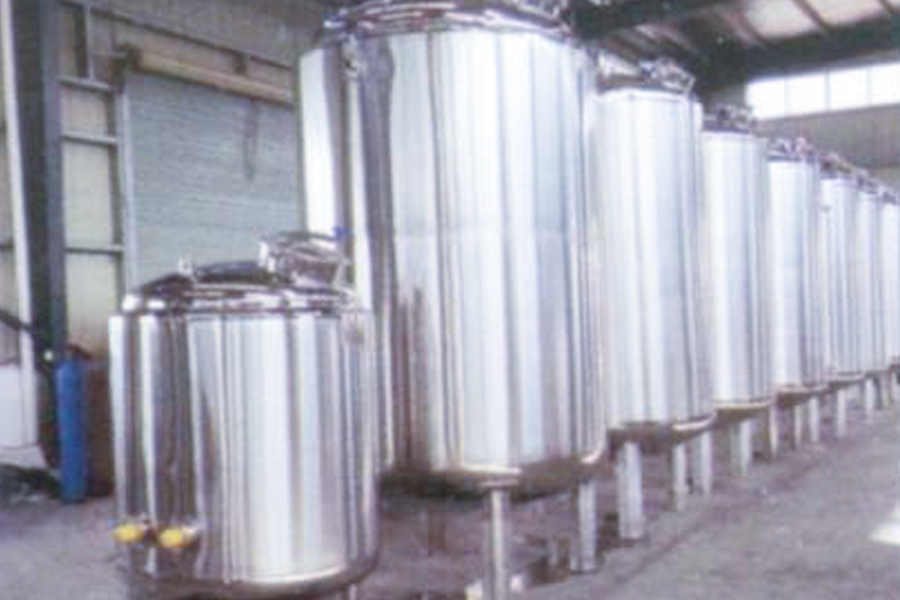
The creation of stable, fine-textured products like creams, lotions, sauces, salad dressings, paints, and certain pharmaceuticals relies on a process that intimately combines two or more normally immiscible liquids, such as oil and water. The specialized equipment designed to achieve this is the Dispersed Emulsification Tank. This type of processing vessel goes beyond simple mixing; it is engineered to apply high shear forces that break down internal phases into minute droplets and uniformly distribute them within a continuous phase, forming a stable emulsion. The design and operation of a Dispersed Emulsification Tank are critical for determining the droplet size, texture, shelf life, and overall quality of a vast range of consumer and industrial products.
The core function of a Dispersed Emulsification Tank is to generate and control intense mechanical shear. While a standard stirred tank may blend ingredients, it often lacks the energy input required to create a fine, stable emulsion. A typical Dispersed Emulsification Tank is equipped with a high-speed rotor-stator mixer or a similar high-shear impeller. As the rotor turns at high speed within a stationary stator, the mixture is drawn into the workhead, subjected to tremendous shear and turbulence within the narrow gap, and then expelled at high velocity. This action repeatedly breaks down droplets to a microscopic scale. Many systems also incorporate a slower-speed anchor or sweep agitator around the tank wall to ensure overall circulation and prevent dead zones, working in tandem with the high-shear head to achieve homogeneity.
The application of Dispersed Emulsification Tank technology is fundamental in several key industries. In cosmetics and personal care, these tanks are used to produce stable emulsions for moisturizers, sunscreens, and conditioners, where texture and consistency are paramount. The food industry utilizes them for creating mayonnaise, margarine, ice cream mix, and creamy sauces. In paints, coatings, and adhesives, a Dispersed Emulsification Tank ensures pigments and binders are uniformly distributed for consistent color and performance. The pharmaceutical sector employs them in the production of topical creams and certain liquid drug formulations. In each case, the quality of the emulsion—its fineness, stability against separation, and sensory properties—is directly tied to the performance of the Dispersed Emulsification Tank.
Achieving a successful outcome in a Dispersed Emulsification Tank depends on precise control of several process parameters. The lots of critical is the shear rate applied, which is influenced by the rotor-stator design, tip speed, and the duration of high-shear mixing. The sequence of ingredient addition is also vital; typically, the continuous phase is added, and the dispersed phase is introduced gradually under shear. Temperature control is often necessary, as many emulsions are processed at elevated temperatures to reduce viscosity and then cooled to set the structure.
Developments in Dispersed Emulsification Tank technology are increasingly focused on energy efficiency, scalability, and process intensification. New rotor-stator geometries aim to deliver higher shear with lower power consumption. There is a trend toward in-line Dispersed Emulsification Tank systems that operate continuously, as opposed to batch tanks, offering higher throughput for large-scale production. Integration with real-time monitoring, such as in-line particle size analyzers, allows for automatic adjustment of shear time and speed to achieve a target droplet size distribution, ensuring batch-to-batch consistency. As consumer expectations for product quality and natural formulations rise, the ability to create stable, fine emulsions with small energy and precise control becomes more valuable.







 English
 عربى
عربى
