-
 [email protected]
-
 +86-13706666922
[email protected]
+86-13706666922

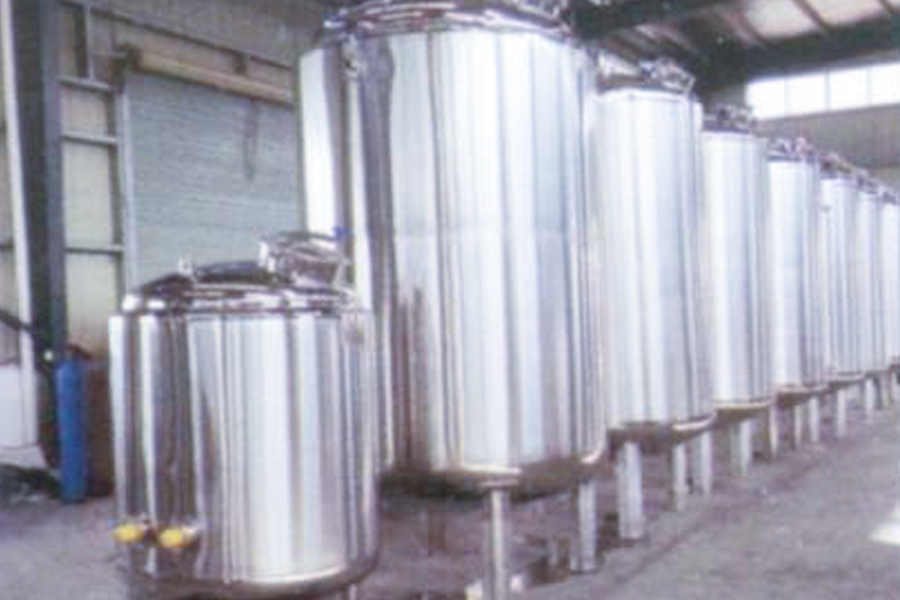
In the production of a wide array of products—from pharmaceuticals and cosmetics to food sauces, paints, and specialty chemicals—creating a stable, uniform blend of ingredients that do not naturally mix is a common challenge. This process of emulsification and dispersion is expertly handled by a specialized piece of equipment: the dispersed emulsification tank. This vessel is specifically engineered to apply high shear forces, breaking down droplets and particles to create homogenous, stable mixtures of immiscible liquids or finely distributed solids within a liquid medium.
The core function of a dispersed emulsification tank goes beyond simple stirring. It is designed to introduce intense mechanical energy into the mixture. This is typically achieved through a high-speed rotor-stator assembly or a similar high-shear mixing head, which is lowered into the tank. As the rotor turns at high velocity, it draws materials into the workhead, where they are subjected to tremendous shear forces within the precision gap between the rotor and stator. This action repeatedly breaks down droplets (in emulsification) or agglomerates (in dispersion) to a microscopic size, resulting in a fine, stable emulsion or suspension. The tank itself is often jacketed for temperature control, as heat generation can be significant during this intensive mixing process.
The applications for a dispersed emulsification tank are critical in industries where product consistency, texture, and shelf stability depend on a superb mixture. In the cosmetics industry, these tanks are used to produce stable lotions, creams, and serums where oil and water phases must be seamlessly combined. Pharmaceutical manufacturing utilizes dispersed emulsification tank technology to create injectable emulsions or uniform suspensions of active ingredients. Food processors rely on them for mayonnaise, salad dressings, sauces, and certain dairy products. Furthermore, in coatings and chemical manufacturing, dispersed emulsification tanks ensure pigments and additives are uniformly dispersed in a resin or solvent base, affecting the final product's color, gloss, and performance.
The design and operation of a dispersed emulsification tank are geared toward achieving repeatable results. Key variables include the tip speed of the rotor, the duration of the high-shear mixing phase, the temperature profile, and the order of ingredient addition. Many systems are highly controllable, allowing operators to program specific shear rates and mixing times for different product formulations. The tank is often part of a larger process line; after the high-shear emulsification or dispersion phase is complete, the product may be transferred to a standard mixing tank for additional blending, cooling, or de-aeration.
Selecting the appropriate dispersed emulsification tank involves considering batch size, the viscosity of the phases, the required particle or droplet size distribution, and the necessary hygienic standards. Sanitary designs with polished surfaces and clean-in-place capabilities are essential for food, pharmaceutical, and cosmetic applications. The scalability of the process from laboratory to production is also a crucial factor, ensuring that the emulsion quality achieved in a small dispersed emulsification tank can be replicated in a much larger one.
Innovation in dispersed emulsification tank technology focuses on improving energy efficiency, enhancing process control through in-line particle size monitoring, and developing single-use systems for applications requiring absolute batch-to-batch separation. As demand grows for more sophisticated, multi-component formulations with specific functional properties, the precision offered by advanced dispersed emulsification tank systems becomes increasingly valuable. This equipment stands as a testament to applied mechanical engineering in process manufacturing, transforming separate, unwilling components into integral, stable, and commercially vital products through the precise application of controlled force.








 English
 عربى
عربى
