-
 [email protected]
-
 +86-13706666922
[email protected]
+86-13706666922

In the production of paints, coatings, adhesives, food products, cosmetics, and pharmaceuticals, a common requirement is to blend multiple components into a homogeneous mixture and then accurately dispense or transfer the finished product, a single piece of equipment designed to perform both these functions efficiently is the Dispensing Mixing Tank. This integrated system combines the capabilities of a mixing vessel with a controlled discharge mechanism, streamlining workflow from batch preparation to packaging or downstream filling. The use of a Dispensing Mixing Tank enhances operational efficiency, improves batch consistency, and reduces material handling, making it a valuable asset in batch-oriented manufacturing where precision and cleanliness are important.
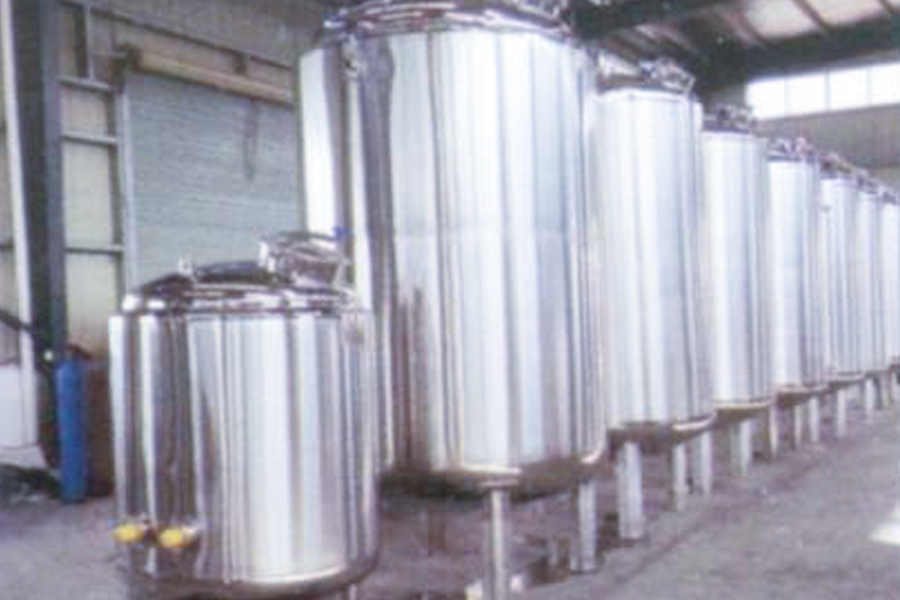
The core design of a Dispensing Mixing Tank centers on a sealed vessel equipped with an agitation system. The tank itself is typically constructed from stainless steel or other suitable materials, featuring a smooth, polished interior for easy cleaning. An agitator, driven by a top- or bottom-mounted motor, ensures thorough blending of liquids, powders, or viscous materials. The defining feature that distinguishes it from a standard mixer is the integrated dispensing system. This usually involves a bottom-mounted valve—such as a sanitary ball valve, diaphragm valve, or pump connection—that allows for the controlled, often metered, release of the mixed contents. The entire assembly, including the tank, agitator, and discharge path, is often designed for easy cleaning (Clean-in-Place or CIP) to maintain product purity between batches.
The application of Dispensing Mixing Tank technology is prominent in industries where batch integrity and accurate portioning are key. In paint and coatings manufacturing, a Dispensing Mixing Tank is used to blend pigments, resins, and additives, and then precisely dispense the finished paint into cans or drums. Adhesive and sealant producers use these tanks to mix formulations and fill cartridges or pails. Within food processing, a Dispensing Mixing Tank can prepare sauces, dressings, or beverage syrups before transferring them to filling lines. The cosmetics industry employs them for blending lotions, creams, and shampoos, with the dispensing function aiding in packaging. This dual-purpose design eliminates the need to transfer the mixture to a separate holding or filling vessel, reducing potential contamination, exposure to air, and labor.
Key operational benefits drive the adoption of Dispensing Mixing Tank systems. is the reduction in process steps and contained material handling, which lesss product loss and improves overall batch yield. Second, the closed nature of the system from mixing through dispensing enhances hygiene and protects sensitive ingredients from oxidation or moisture absorption. Third, for metered dispensing, the integration of load cells under the tank or positive displacement pumps allows for accurate weight- or volume-based discharge, which is critical for consistent packaging and inventory control. The ability to fully drain the tank through the bottom valve also reduces waste and simplifies cleaning compared to tanks with residual sumps.
Current trends in Dispensing Mixing Tank development focus on enhancing automation, flexibility, and scalability. Modern systems are often supplied with programmable logic controllers (PLCs) that can execute a mixing recipe—controlling agitation speed and time—and then automatically initiate a dispensing cycle. As manufacturers across sectors seek to consolidate process equipment and improve line efficiency, the integrated functionality of the Dispensing Mixing Tank offers a practical solution. Its continued evolution supports the industry-wide goals of streamlined production, enhanced product quality, and reduced operational complexity.







 English
 عربى
عربى
