-
 [email protected]
-
 +86-13706666922
[email protected]
+86-13706666922

Concentrate tanks are specialized storage vessels used in industries such as mining, food processing, and wastewater treatment to hold thickened slurries, juices, or chemical solutions before further processing. Unlike standard storage tanks, concentrate tanks are designed to handle materials with high solids content or high viscosity, preventing settling and maintaining uniformity.
The primary function of a concentrate tank is to hold a product that has been thickened or concentrated from a dilute stream. In mineral processing, concentrate tanks receive the valuable mineral slurry after it has been separated from waste material. The slurry sits in the tank while excess water drains or is decanted off, further increasing the solids content before the concentrate moves to filtration or smelting. In juice production, concentrate tanks hold evaporated juice that has had much of its water removed, preserving flavor and reducing shipping volume.
The design of a concentrate tank must prevent settling of solids. When solid particles sit in a tank for an extended period, they tend to sink to the bottom, forming a dense layer that can be difficult to resuspend. Concentrate tanks typically include a slow-speed agitator or rake mechanism that keeps solids in suspension. The agitator blades are designed to move material from the bottom and sides of the tank toward the outlet, ensuring that the concentration remains uniform throughout the tank.
The shape of a concentrate tank affects its performance. Flat-bottom tanks are simpler and less expensive but require stronger agitation to prevent solids buildup in the corners. Cone-bottom tanks have a sloping floor that directs solids toward the center outlet, where they are more easily mixed or drained. The cone angle must be steep enough that solids slide down rather than sticking. For very thick concentrates, a tank with a steep cone and a scraper blade that rotates along the bottom is used.
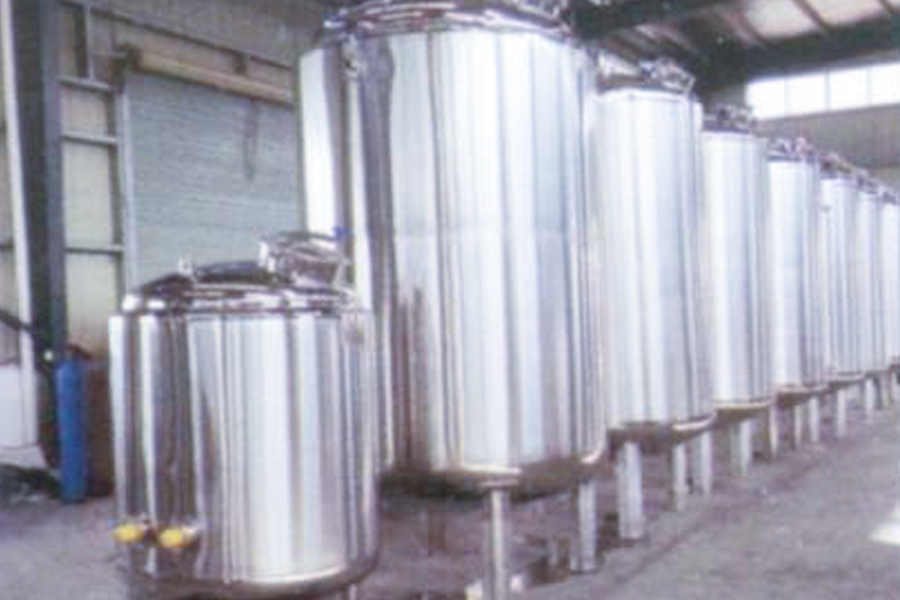
The material of construction for concentrate tanks depends on the product being stored. Stainless steel is common for food and beverage concentrates, as it is easy to clean and does not react with acidic products such as orange juice or tomato paste. Carbon steel with a protective coating may be used for mineral concentrates that are not corrosive. Rubber-lined tanks protect against abrasion from sharp mineral particles that would wear away bare steel. The tank material should not contaminate the concentrate or react with it chemically.
The temperature control of a concentrate tank is important for some products. Fruit juice concentrates are often stored cold to prevent fermentation and spoilage. The tank may have a cooling jacket or internal coils that circulate chilled water or glycol. Some concentrate tanks are insulated to maintain temperature without excessive energy use. For concentrates that tend to crystallize or thicken at low temperatures, heating coils keep the product fluid enough to pump.
For industries that produce thickened or concentrated products, the concentrate tanks provide the storage and conditioning needed before final processing. They keep solids suspended, maintain temperature, and discharge reliably. A well-designed concentrate tank handles thick, sticky, or abrasive materials that would cause problems in standard tanks, keeping production flowing smoothly from concentration to packaging.







 English
 عربى
عربى
