-
 [email protected]
-
 +86-13706666922
[email protected]
+86-13706666922

A CIP system begins with the layout of the equipment that needs to be cleaned. Tanks, pipes, valves, pumps, spray devices, and heat exchangers can form different circuits depending on the production process.
The cleaning liquid needs to reach the internal surfaces of these components. As a result, pipe diameter, valve position, pump capacity, tank volume, and connection points all become part of the system design.
For Clean In Place Systems CIP, the process circuit is therefore more than a collection of individual components. The equipment must work together so that cleaning fluid can move through the intended path.
A typical CIP cycle uses a circulation loop. Cleaning fluid is stored in a dedicated tank before being pumped into the selected process line.
The liquid then passes through pipes and process equipment before returning to the CIP tank. Depending on the system configuration, several circulation stages can be arranged around different process circuits.
Flow velocity has an important role because moving liquid creates contact between the cleaning solution and internal equipment surfaces. Pump selection, pipe dimensions, valve arrangement, and circuit length can all influence fluid movement.
This makes Clean In Place Systems CIP closely connected with fluid engineering rather than simply being a separate cleaning machine.
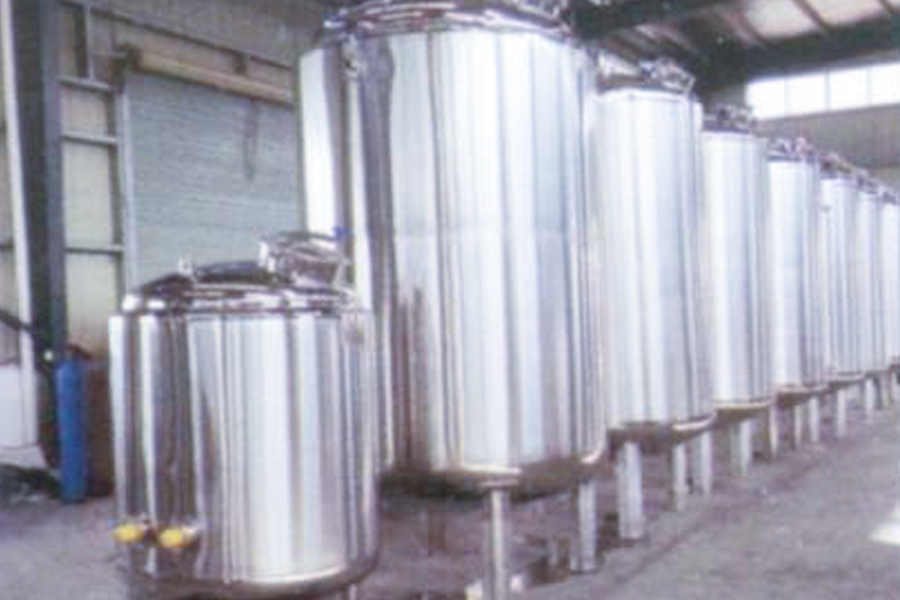
CIP tanks provide space for different process liquids, while pumps move those liquids around the circuit. A system may contain separate tanks for water, alkaline solutions, acidic solutions, or other process fluids.
Tank capacity depends on the size and configuration of the production system. Larger processing lines can require greater circulation volumes, while smaller circuits may use compact tank arrangements.
The pump needs to provide suitable flow for the connected equipment. Its relationship with pipe diameter, pressure loss, valves, and return lines needs to be considered during system design.
For equipment manufacturers, the combination of tanks and pumps forms a central part of Clean In Place Systems CIP architecture.
Industrial process lines can contain many branches. A CIP system therefore needs a method of directing cleaning fluid toward selected equipment.
Automated valves can open or close different sections of the circuit according to the cleaning sequence. One route may lead toward a storage tank, another toward a processing vessel, and another toward a filling line.
Valve arrangement can become complex when several production circuits share one CIP station. Engineers need to consider flow direction, connection points, return paths, and the order in which individual sections enter the cleaning cycle.
This makes valve configuration an important design factor for Clean In Place Systems CIP.
Modern CIP equipment often combines mechanical components with control systems. Sensors can monitor variables such as temperature, flow, conductivity, and liquid level.
A programmable control system can coordinate pumps, valves, heaters, and other components according to a defined cleaning sequence. This allows different circuits to follow repeatable process steps.
Automation also helps operators view the status of individual stages from a centralized interface. For Clean In Place Systems CIP, the control layer effectively connects the physical equipment into one coordinated process.
CIP technology is closely associated with industries where liquids move through enclosed process equipment. Beverage production can involve tanks, blending systems, pipelines, and filling equipment. Dairy processing uses interconnected vessels, pumps, valves, and heat-transfer equipment.
Pharmaceutical manufacturing can also involve complex fluid-processing systems requiring carefully controlled cleaning sequences. Other applications include food ingredients, liquid products, brewing, and industrial fluid processing.
The exact CIP configuration varies according to the production line. Equipment size, process layout, liquid characteristics, and cleaning requirements can all influence system selection.






 English
 عربى
عربى
